
The Pricing Story Corrugated Plants Can’t Ignore
2026 has been a volatile year for containerboard pricing, and the volatility isn’t over…
Containerboard Prices: In just five months, major producers announced increases of $80 to $140 per ton, prompting AICC to warn that independent box makers are disproportionately affected.
Energy and Logistics: Oil above $100 a barrel, diesel approaching $6 a gallon and rising freight surcharges are pushing production and delivery costs higher.
Trade Tensions: U.S.–Canada tariffs on affected pulp, paper and paperboard products now reach as high as 50%, adding another volatile cost variable.
Add labor, insurance and uneven demand, and fixed-price quotes can lose margin between estimate and production.
Independent converters can’t control these forces. What they can control is how much of that volatility reaches their margins.
That makes technology more than an IT decision. The competitive advantage is increasingly how quickly a plant can see a cost change, understand its impact and respond.
This article examines several ways independent converters can build more operational resilience and adaptability heading toward 2030.

How Technology Can Reduce the Lag Between Cost Changes and Action
For independent plants, the advantage is not simply having more data. It is about having systems that can act on changing information quickly, removing manual work between a new cost signal and the plant’s response.
Immediate Real-Time Estimation Synchronization
When material prices are moving quickly, the problem isn’t simply knowing that a supplier changed its price. It’s how long that information takes to reach the next quote.
AI-enabled workflows can help compress that gap by reading incoming supplier documents, structuring pricing information, and moving that data into estimating with less manual intervention. Supplier price updates arriving through emails, PDFs and other unstructured documents can be read, interpreted and moved into costing systems with far less manual intervention. At the same time, incoming RFQs can be converted into structured estimating information.
The larger shift is the connection between the two. Estimating no longer has to operate several steps removed from what purchasing knows. This is also where the next evolution of ERP begins: specialized AI Agents that can interpret incoming information, execute defined workflow steps, and move work forward inside the system.
For independent box plants buying containerboard on the open market, that matters. When costs can change between the day an RFQ arrives and the day the job is quoted, the speed of information becomes part of margin control.
When Board Costs Move, How Fast Can You See the Impact?
Margin pressure can no longer be managed after the fact Three rounds of containerboard increases in a single year—including unprecedented spikes of up to $140 per ton—mean historical reporting only tells you where your profit used to be. Predictive analytics can help shift the question from ‘What did that increase cost us?’ toward ‘Where is that increase most likely to affect upcoming work?’”
That changes the role of ERP. Historical reporting tells you where margin went. Predictive analytics can help you see where it may be going.
By analyzing purchasing, inventory, estimating and production data together, manufacturers can begin to anticipate material requirements, demand and capacity—and model how changing costs could affect upcoming work. By combining purchasing, inventory, estimating and production data, manufacturers can begin modeling where changing costs may affect future work.
This points to a broader evolution in ERP: moving beyond a system of record toward a system that can help identify what is changing and where action may be needed.
Material Forecasting: Seeing Requirements Earlier
Fearing sudden shortages, independent plants may tie up critical working capital by stockpiling as much paperboard as their warehouse can hold, locking away liquidity exactly when a business needs to be agile.
- Demand Analysis: Predictive models use backlog, historical demand and product mix to anticipate material needs.
- Lead-Time Visibility: Current requirements can be compared with supplier lead times to flag potential shortages earlier.
- Smarter Purchasing: Forecasting when linerboard and medium will reach critical levels helps reduce excess inventory and better align purchasing with production.
The goal is not more inventory. It is better information, earlier—giving purchasing more time to act while preserving the flexibility independent plants need when market conditions change.
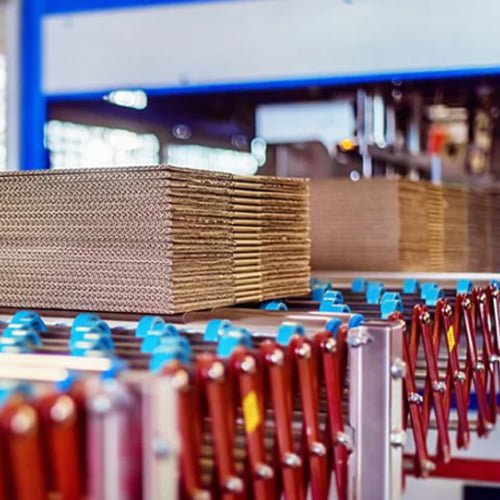
Precision Roll Stock Inventory: Tightening Cost Controls Under Tariff Squeezes
When open-market paper prices fluctuate daily, paper waste transitions from an operational nuisance to a severe margin leak. Independent corrugators and sheet feeders cannot afford to let expensive, tariff-impacted paperboard sit unaccounted for on the warehouse floor.
- Sheet Inventory: Tracks available sheet sizes, board combinations, quantities and costs.
- Material Costing: Maintains current supplier costs for more accurate estimating and job costing.
- Sheet & Trim Optimization: Matches available materials to jobs to reduce trim, scrap and unnecessary purchasing.
- Purchasing Forecasts: Uses backlog and lead times to anticipate sheet requirements and avoid excess inventory.
Outlasting the Tariff Squeeze: Ditching the Spreadsheet Lag to Survive Rapid Market Shifting
Relying on traditional spreadsheets leaves independent box plants dangerously exposed to rapid market volatility. When tariffs, mill price hikes, or freight surcharges strike, manual workbooks create a critical data lag—leaving estimating, procurement, and production teams operating completely out of sync.
The risks of this manual dependency are backed by clear industry benchmarks:
- The 88% Error Benchmark: A widely cited study found that up to 88% of business spreadsheets contain errors—a significant risk when material and production assumptions determine margins.
- Data Latency: New material pricing can sit in emails or spreadsheets for days. Technology should remove that manual lag, moving current costs into estimating faster.
- Disconnected Operations: When estimating, inventory and production rely on separate data, people become the connection between them.

Connecting real-time mill pricing, roll stock, estimating and production data reduces those manual blind spots. More importantly, it allows information to move through the operation without employees having to be the connection between systems. Technology should do more of that work—not create more of it.
Where the Real Advantage Gets Won or Lost: Estimating for Corrugated
An RFQ arrives by email with a PDF attached. Instead of rekeying specifications, AI can read the RFQ, extract the job data and move it into the estimating workflow.
Conversational ERP takes that further. An estimator can increasingly describe a job in natural language, while an AI Agent gathers information, asks for missing details, and begins moving the job into the estimating workflow. The technology takes on the routine work; the estimator retains the judgment.
When board prices are moving, that speed matters—but only if the data is current. A fast quote built on stale costs is simply the wrong number delivered faster.
When tariffs, oil prices and raw material costs can change the economics of a job quickly, the opportunity is faster estimating with current costs, better margin visibility and less manual work.

Volatility May Be the New Operating Environment
Tariffs may ease. Containerboard and freight costs will change. Another disruption will follow. The mistake is treating each as an isolated crisis.
Independent plants have an outsized advantage: agility. They can make decisions quickly, stay close to customers and adapt. Their ERP should strengthen that advantage—not limit it.
The real value of an end-to-end ERP built for corrugated is control and adaptability. It connects the operation today while providing the flexibility to respond as markets, customers and workflows change. With AI increasingly able to take on repetitive operational work, surface changing conditions and work within critical workflows, that adaptability becomes even more powerful.
Independent plants need technology that can change as quickly as they can—whatever comes next.
If You Want to Explore More…
Two tools offer a low-risk way to see how some of these ideas are being applied to packaging workflows.
HiFlow Quote is a standalone AI-powered estimating platform for corrugated and other packaging manufacturers. It can extract job information from incoming inquiries and turn it into structured estimating data—and can work alongside an existing ERP rather than requiring a system replacement. That reflects HiFlow’s broader product direction: AI-Powered ERP That Does Real Work, with specialized AI Agents designed to perform defined operational tasks across packaging workflows

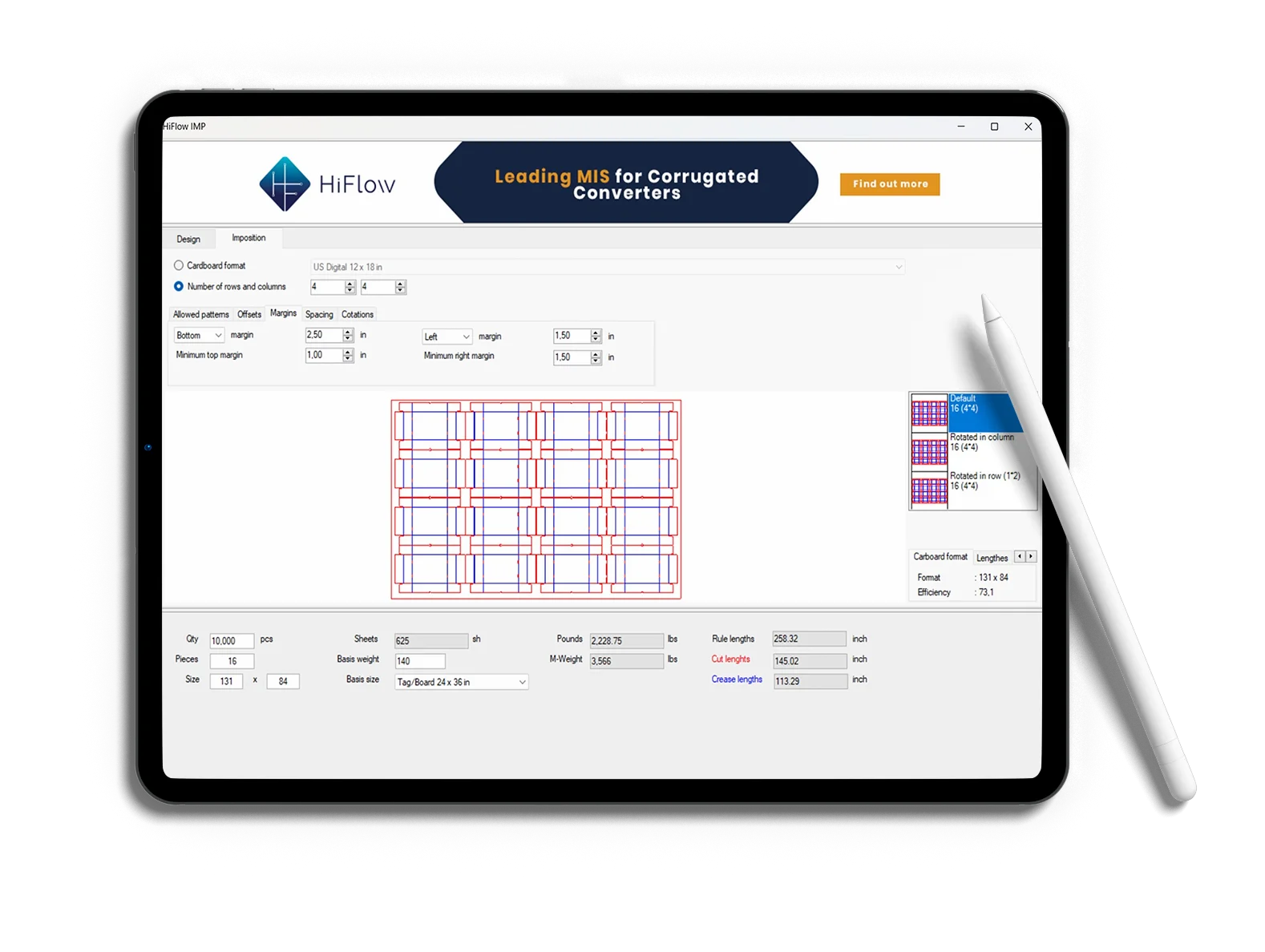
HiFlow IMP is a free standalone layout tool for exploring ways to optimize layouts, reduce material waste and speed estimating and prepress. It includes FEFCO and ECMA libraries and supports custom packaging calculations.
Additional articles you might find valuable

Bridging the Gap: Leveraging an ERP/MIS to Mitigate Skilled Labor Shortages
SUMMARY The skilled labor shortage has become a significant challenge across various industries, with sectors like manufacturing, logistics, and packaging feeling the impact most acutely. As the demand for skilled labor continues to outpace supply, organizations are...

Shop Floor Scheduling: Are You Getting the Most out of Your Plant’s Production Capacity?
SUMMARY Summary: SEMrush data from 2024 shows that companies integrating advanced scheduling technologies experience a 25% increase in production efficiency. Getting the most out of your plant’s capacity means implementing a robust ERP that helps plan, execute, and...

Seeing is Believing: Exploring HiFlow’s Highly Visual Workflow
SUMMARY Sometimes it can be difficult to quickly get to a full 360-degree view of the converter’s operation, including both production and business elements. That’s why HiFlow developers have placed a strong focus on developing a highly visual representation of a...