
Summary
Packaging estimating isn’t a people problem—it’s a tools problem. Spreadsheets, outdated assumptions, and fragmented workflows lead to slow quotes, inconsistent pricing, and hidden margin loss. As complexity grows, these gaps widen. Purpose-built estimating systems replace guesswork with structured data, dramatically improving speed, accuracy, and consistency while protecting margins and preserving critical knowledge across the organization.
Packaging estimating. It’s not a people problem.
It’s a tools problem that looks like a people problem.
Speed, accuracy, consistency, and visibility are all critical to quoting packaging jobs. Yet most estimating workflows fail on all four—not because estimators lack expertise, but because the tools and processes were never designed for the complexity of packaging production.
The problem isn’t capacity—it’s capability.
Walk into most packaging plants today and you’ll find estimating running on spreadsheets — not as a temporary fix, but as the system. Built over years, maintained by whoever understands them best, and held together until the formulas break, the costs go stale, or the person who built them leaves.
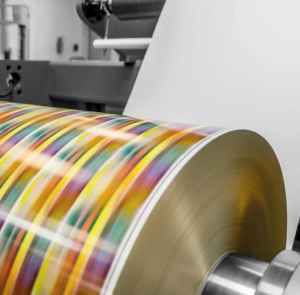 The platforms that were supposed to replace them weren’t built for packaging either. They were built for commercial printing — flat products, standard substrates, linear production paths — then extended into packaging as the market grew. Modules added. Capabilities bolted on. Commercial print logic stretched to cover folding carton, labels, flexible packaging, and corrugated — manufacturing environments with fundamentally different complexity and fundamentally different consequences when an estimate is wrong.
Packaging companies are still trying to quote jobs using manual workflows built on spreadsheets, emails, and tribal knowledge. That’s why estimating tools designed specifically for packaging manufacturing—not retrofitted from commercial print systems—are changing the game.
Let’s unpack why estimating packaging jobs remains one of the most complex—and frustrating—parts of the business, and what to do about it.
Why Packaging Estimating Is Fundamentally Different
Commercial print estimating tools were designed for flat products with linear production paths. Packaging introduces complexity at every stage.
Substrate variations alone create significant complexity. Folding carton operations account for board grades, coatings, and equipment behavior. Flexible packaging adds film structures and barrier properties. Corrugated brings flute combinations. Label converters manage adhesive types, liner materials, and face stock — each affecting cost, waste, and production speed differently.
Die cutting and tooling add a layer commercial print never encounters. Every job requires evaluating die costs, setup time, cutting speed, and whether existing tooling can be modified — decisions that cascade through the entire cost structure.
Production path options multiply exponentially. A single folding carton job might run on three press configurations with multiple die cutting approaches, coating options, and finishing sequences — each producing different costs, timelines, and quality outcomes.
Material waste calculations grow more complex as designs become more intricate — setup waste, trim waste, rejected units, and press makeready percentages that swing dramatically based on run length and substrate.
Where Your Margin Goes
The losses rarely show up as a single bad job. They accumulate through patterns that are easy to miss until they’ve been running for months.
Outdated pricing assumptions. An estimator learned that 18pt SBS runs $1,200 per ton 7 months ago. It’s now $1,450. The spreadsheet hasn’t been updated — and every quote using that assumption is underwater before production starts.
“On a single $10,000 job, a 3% substrate miscalculation costs $300. Across 500 jobs per year, that’s $150,000 in lost margin—from one error type, in one category.”
Wrong waste factors. Process improvements and newer equipment have brought actual waste down from 18% to 12% on certain jobs. But the estimating template still uses 18%. You’re either quoting uncompetitively or achieving better efficiency than you quoted — and the margin improvement disappears into the gap between estimated and actual.
The tribal knowledge gap. Most packaging manufacturers depend on senior estimators who carry decades of accumulated knowledge — which substrates run well on which presses, which die configurations work best for specific constructions, how much waste to expect for different job types. When experienced estimators retire or leave, pricing becomes inconsistent, margins erode, and the learning curve for replacements is steep.
A Real-World Example: The Plant That Fired Its Spreadsheets
It’s 7:30 am at Wausau Container Corp, a folding carton manufacturer in Wisconsin. Before the first press rolls, the estimating team is already behind.
 Three RFQs arrived overnight. Each is a PDF with incomplete specifications. An estimator opens the spreadsheet, cross-references material pricing from a separate file — last updated two weeks ago — and starts building the estimate from memory and habit. The job is a crash lock bottom carton with soft-touch lamination and spot UV. Board grade, caliper, coating sequence, gluing configuration — each variable requires a judgment call. Forty-five minutes in, a sales rep calls asking when the quote will be ready. The customer needs it by noon.
A second estimator picks up an overflow job. Same box style, different person — different waste assumption, different die cost interpretation, different press selection. One accounts for the rotary die amortization. The other doesn’t. Neither knows the other’s number.
The quote goes out. It wins. Three weeks later, the job runs — and margins come in short. The spot UV was estimated for inline application. Production ran it offline. The finishing cost difference wasn’t visible in the spreadsheet. Material costs had moved since the pricing file was last updated. Nobody caught either issue before the quote reached the customer.
At month-end, finance flags the margin erosion. Estimating gets the conversation. The team agrees to be more careful next month. The spreadsheets don’t change. The process doesn’t change
The issue wasn’t Excel. It was fragmentation.
As complexity grew—more SKUs, shorter runs, tighter requirements—the legacy system couldn’t keep up. Spreadsheets filled the gaps, becoming the unofficial system for estimating, scheduling, and materials.
But spreadsheets introduced risk:
- Data silos
- Manual errors
- Limited visibility
- No feedback loop from production
The turning point came with a better question:
Why are we relying on spreadsheets at all?
When Wausau moved to a purpose-built estimating system, the spreadsheets didn’t get replaced with something shinier. They got replaced with something accurate.
 The downstream effect was immediate. Quotes went out faster because estimators weren’t reconstructing logic from scratch on every job. Margins held because secondary operations stopped falling through the cracks. And for the first time, when a job closed out in production, the team could compare what was estimated against what actually ran — and see exactly where the gap was.
“When Wausau fired their spreadsheets and moved to software built specifically for the needs of packaging manufacturing, the errors, inconsistencies, and margin surprises went with them. The problem was not estimators. It was the tools.”
Wausau’s story isn’t unique — and that’s the point. Many folding carton manufacturers are still operating with the same spreadsheet dependency, even as complexity increases. Companies like Wausau struggled to find solutions that best fit the needs of packaging manufacturers.
A Better Approach to Packaging Estimating
Traditional estimating methods, and those adapted from commercial estimating software, have fallen short. Packaging manufacturing needs estimating software built specifically for the way packaging jobs are structured and priced.
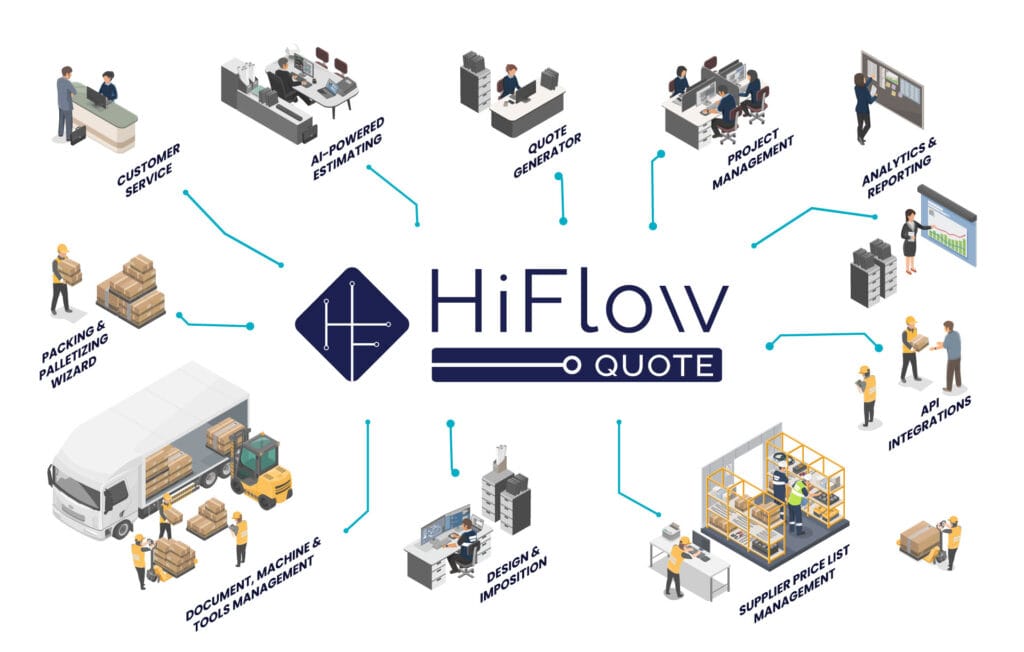
 HiFlow Quote is AI-powered estimating software built exclusively for folding carton, flexible packaging, corrugated, and label converting manufacturers. The system uses AI to automatically extract job specifications from RFQ documents, offers detailed cost breakdowns across materials, labor, tooling, and overhead, and identifies pricing errors before quotes reach customers. By codifying estimating knowledge in the system rather than individual estimators’ experience, HiFlow Quote delivers consistent pricing across all estimators while dramatically reducing quote turnaround time.
Additional articles you might find valuable

Bridging the Gap: Leveraging an ERP/MIS to Mitigate Skilled Labor Shortages
SUMMARY The skilled labor shortage has become a significant challenge across various industries, with sectors like manufacturing, logistics, and packaging feeling the impact most acutely. As the demand for skilled labor continues to outpace supply, organizations are...

Shop Floor Scheduling: Are You Getting the Most out of Your Plant’s Production Capacity?
SUMMARY Summary: SEMrush data from 2024 shows that companies integrating advanced scheduling technologies experience a 25% increase in production efficiency. Getting the most out of your plant’s capacity means implementing a robust ERP that helps plan, execute, and...

Seeing is Believing: Exploring HiFlow’s Highly Visual Workflow
SUMMARY Sometimes it can be difficult to quickly get to a full 360-degree view of the converter’s operation, including both production and business elements. That’s why HiFlow developers have placed a strong focus on developing a highly visual representation of a...